HF Propagation Explained: How Solar Cycles, MUF, and Skip Affect Your Contacts
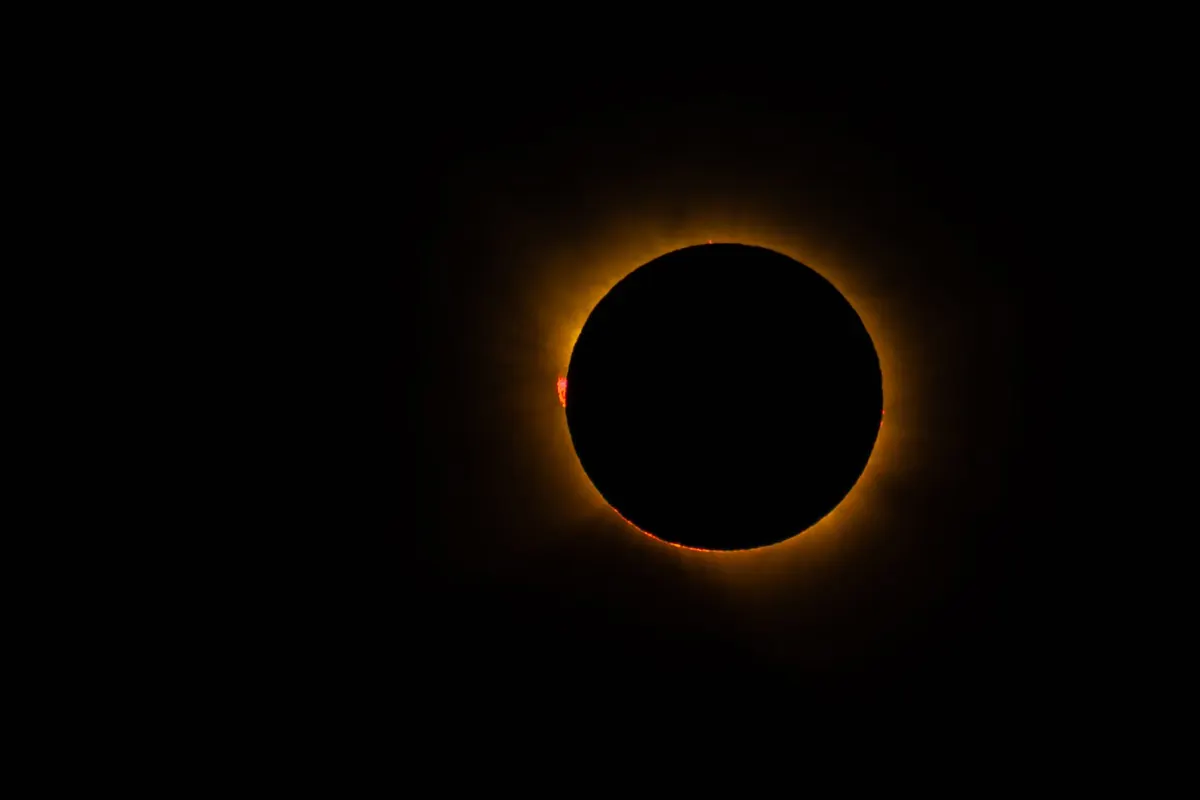
At eight in the morning, 40 meters is a wall of static and 15 meters sounds like the band is switched off. Two hours later the roles have reversed. Nothing changed at your station. What changed is a thin shell of ionized gas a couple of hundred miles overhead, and it shifts with the sun.
HF propagation has a reputation for being arcane, mostly because the vocabulary arrives all at once: solar flux, K index, MUF, F2, skip. Strip the jargon away and four ideas carry almost all the weight. Solar activity sets the ceiling on which bands can work. The ionosphere decides which ones actually do. Path geometry decides where your signal lands. Space weather decides whether any of it cooperates today. Once those four click, you stop hoping for a band opening and start planning one.
The Ionosphere, in Plain Terms
Solar ultraviolet and X-ray radiation knocks electrons loose from atoms in the upper atmosphere, creating layers of charged particles that bend radio waves. The one that matters most for long-distance work is the F layer, sitting roughly 150 to 250 miles up. When your signal hits it at a shallow angle, it refracts — bends — and comes back down to Earth hundreds or thousands of miles away. That bend is the whole trick behind HF DX.
The D layer, much lower at around 40 to 55 miles, does the opposite. It absorbs energy, especially on the lower bands, and it only exists during daylight, because it recombines quickly once the sun goes down. This single fact explains most of the daily rhythm of HF. At noon, 80 and 40 meters are being swallowed by the D layer, so you work 20, 17, or 15. After dark, the D layer vanishes, absorption drops, and 80 and 40 open up for real distance while the higher bands fade as the F layer loses its charge.
The Solar Cycle Sets the Ceiling
Sunspot count rises and falls on a roughly eleven-year cycle, and sunspots are the visible signature of the magnetic complexity that throws off the ultraviolet energy feeding the ionosphere. More sunspots generally means a denser, higher F layer and a higher maximum usable frequency. That is why 10 and 12 meters feel like magic during solar maximum and like empty space at solar minimum.
We are on the back side of the current cycle's peak. Plenty of operators read that as bad news, which is a mistake. Declining years often bring a quieter geomagnetic field, and quiet is good. The high bands won't be open as often or as late into the evening, but when 10 meters does open, it can still deliver worldwide contacts with modest power. Meanwhile the low bands get steadier, and winter nights on 80 and 160 meters become the main event.
MUF: The Number That Decides Which Band Works
The maximum usable frequency is the highest frequency that will refract back to Earth for a specific path at a specific moment. Shoot above it and your signal goes straight out into space. Shoot too far below it and you run into absorption and noise, which is where the lowest usable frequency comes from. Between those two limits sits the sweet spot.
A useful rule of thumb is that the best working frequency runs around 85 percent of the MUF. If the MUF between you and central Europe is 24 MHz at midday, 20 meters is comfortably inside the window and 15 meters may also work. If the MUF collapses to 14 MHz after a flare, 20 meters goes dead and 40 meters becomes the sensible choice. Public MUF maps and prediction tools update constantly and are easy to read once you know you are looking at a ceiling, not a forecast.
Skip Zones, Hops, and Why Your Antenna Angle Matters
Every HF signal has a groundwave component that reaches a few dozen miles, then a dead zone where nothing arrives, then the first returning hop. That dead zone is the skip zone, and its size depends on frequency, the height of the refracting layer, and your antenna's takeoff angle. Higher frequencies and lower angles push the first hop farther out — a single F2 hop on 10 meters can cover well over 2,000 miles.
Long paths often arrive by multiple hops, which is why a signal can sound strong from 4,000 miles away and inaudible from 1,500. If you need regional coverage within a few hundred miles, high bands at low angles will skip right over your target. Drop to 80 or 40 meters and get your signal going nearly straight up instead. Near-vertical incidence skywave, or NVIS, is a genuinely useful technique for emergency nets and state-level traffic, and it usually calls for a low horizontal antenna rather than a tall vertical.
When Space Weather Spoils the Party
Two very different solar events cause two very different kinds of trouble, and telling them apart saves a lot of wasted dial twisting.
Flares versus storms
A solar flare dumps X-rays into the daylight side of the atmosphere and thickens the D layer within minutes. The result is a sudden ionospheric disturbance: the low and middle bands go quiet on whatever part of the world is in daylight, often for twenty minutes to a couple of hours. If 20 meters fades abruptly on a sunny afternoon and the noise floor drops with it, a flare is a reasonable guess. Check the X-ray flux before you blame your antenna.
Coronal mass ejections are slower. A CME launched by a flare can reach Earth a day or two later and stir up the geomagnetic field. Watch the planetary K index; when it reaches 5, you are in storm territory. Auroral absorption shreds polar paths, so contacts into northern Europe and Asia from North America become hard work. The upside is that low-latitude north-south paths on 40 and 80 meters sometimes improve, and 6 meters can briefly produce remarkable sporadic-E and auroral contacts.
Reading the Data Before You Operate
You do not need to become a space weather analyst. A short check before a session covers nearly everything:
- Solar flux index. Under 100 is lean, 100 to 150 is respectable, and 150-plus suggests the high bands are worth trying.
- K index. 0 to 2 is quiet and stable. 4 or higher means a disturbed field, and 5 or more means expect absorption on polar routes. The A index gives you the same story averaged over the past day.
- MUF maps. Find the predicted MUF along your target path, then pick a band around 85 percent of it.
- Live evidence. WSPR, the Reverse Beacon Network, and PSK Reporter show who is hearing whom right now, which beats any prediction.
- Beacons. The International Beacon Project transmits on 14.100, 18.110, 21.150, 24.930, and 28.200 MHz in sequence, so you can hear which bands are actually open on a given path.
WWV also broadcasts geophysical alerts and solar data, and the space weather portion runs at 18 minutes past the hour. It takes two minutes to listen and it will change your band plan for the evening.
A Simple Operating Routine
Rather than checking everything at once, build a habit that takes five minutes and tells you what to do next.
- Check the K index first. If it is 4 or higher, plan for low bands and short paths instead of chasing DX on 10 meters.
- Note the solar flux and the time of day. High flux plus daylight points you toward 17, 15, or 12 meters.
- Scan the beacon network or open a live spotting map. Thirty seconds of listening beats thirty minutes of guessing.
- Work the gray line. The sunrise and sunset terminator is where the D layer is thin, the F layer is still charged, and low-band DX gets noticeably easier. Check a terminator map to see when it crosses your target.
- Write down what worked. A simple log of date, time, band, and conditions will teach you more about your own station than any index, because your antenna and your noise floor are part of the path too.
Solar activity will do what it does. Operators who track the data get to choose their moments; everyone else gets to be pleasantly surprised. Both approaches work, but only one of them lets you plan a Saturday morning around a band that is genuinely likely to be open.